Publishers Weekly: Hugo Award winner Bear’s spectacularly smart space opera, set in the same universe as 2018’s Ancestral Night, begins with the dispatch of an ambulance ship from the immense medical habitat Core General to respond to a distress signal. The signal originates from a vessel docked aboard a lost generation ship that was launched from Earth centuries earlier, before humans overcame their self-destructive impulses and joined a multi-race, interstellar civilization called the Synarche. When rescue specialist Dr. Brookllyn Jens arrives on the scene, she finds the crew of the generation ship sealed in cryogenic containers, with only Helen, an anxious and rather threatening android, conscious. Meanwhile, the crew of the docked ship that sent out the distress signal in the first place are all comatose and the huge machine they have on board looks suspiciously like a combat walker. In addition to untangling the history of these ships, Jens is deputized to investigate increasingly destructive incidents of sabotage at Core General, leading her to question her faith in the hospital’s ideals. Bear’s vivid tale, narrated by the wry, almost painfully self-aware Jens, bristles with inventive science and riveting action scenes. With this outstanding work, Bear proves her mastery of the space opera genre yet again.
Shelf Awareness: Harrow the Ninth has a tough act to follow in 2019’s deranged, electrifyingly fun Gideon the Ninth, but the middle chapter in Tamsyn Muir’s Locked Tomb Trilogy is every bit as wild and weird as its delightful predecessor. Following the events of the first book, Muir shifts protagonists to follow the necromancer Harrowhark as she joins a cohort dedicated to assisting the godlike Emperor in fighting strange cosmic entities.
Muir has not lost her penchant for throwing readers in the deep end, and some incomprehension is to be expected on their part. In fact, Harrow the Ninth is purposefully disorienting even, or perhaps especially, for diehard fans of the first book: the novel bounces back and forth in time, retelling events from the first book with noticeable differences that grow more glaring over time. Whereas Gideon the Ninth welded the structure of a locked-room mystery to its saga of necromancers and their sword-wielding escorts in an ancient, crumbling space-tomb, Harrow the Ninth plunges confidently into a mind-bending puzzle box structure. There is plenty of satisfaction in piecing things together, but it’s not just an exercise in cleverness: Muir has much to say about denial and the dangers of suppressing grief, building to an emotional conclusion that will melt the hardest of hearts.
Harrow is very different from Gideon, more interior and decidedly less raunchy. That does not mean the series has suddenly become strait-laced or lost any of Muir’s sardonic wit. Muir likes to puncture her own odd and highly detailed worldbuilding with a quip, as when one character explains: “A stele is eight feet tall, covered in the dead languages by special Fifth adepts, and continually bathed in oxygenated blood…. The type of thing where, if there is one on board, you say quite soon, ‘Oh, look, a stele!’ ” Plus, Muir continues her streak of best-in-class fight scenes, pushing the limits of her necromantic imagination to disgusting new heights.
Harrow the Ninth carries over all the strengths of its predecessor, in other words, including the verbal sparring and ever-entertaining insults: “you bursting organ, you wretched, self-regarding hypochondriac and half-fermented corpse with the nails still on.” Harrow the Ninth delves even deeper into the vulnerabilities of Muir’s damaged characters, whose posturing can’t hide their hang-ups and death wishes and terrible regrets. Few books can be this funny, sad and romantic all at the same time.
Congratulations to our DMLA authors who have been selected for the 2020 Dragon Awards Ballot!
Best Science Fiction Novel
- Gideon the Ninth, Tamsyn Muir (Tor.com Publishing)
- Network Effect, Martha Wells (Tor.com Publishing)
Best Fantasy Novel (Including Paranormal)
- The Burning White, Brent Weeks (Orbit)
Locus: Five years ago, I was privileged to review, in the online wing of this fine publication, Seth Dickinson’s debut novel, The Traitor Baru Cormorant. I praised his prose as “deft and forceful,” while deeming his characters “all built to clever and deep dimensions, with fully human qualities and motives.” Finding his novel to be a tasty blend of C.J. Cherryh’s early planetary romances and Samuel Delany’s revisionist Nevèrÿon fantasies, I concluded by saying that Dickinson had succeeded “in building and exploring a morally treacherous world populated with exotic characters whose hearts nonetheless align with ours.”
Of course, I had no way at the time of foreseeing what refinements or surprises or critical illuminations subsequent volumes would bring. But now that I’ve caught up with book two, The Monster Baru Cormorant, and now that book three has arrived, I discover that while I stand by all my earlier assessments, I have to add a few fresh notes, and, of course, evaluate the newest entry and the series as a whole.
First, I want to observe that while Traitor struck me as somewhat mannerpunk in its elaboration of ceremonies and politesse, the series has definitely gone grimdark.
Also, I did not give enough weight to Dickinson’s rich and exotic worldbuilding and culture-minting. This universe hangs together organically, and the distinct societies are multiplex and deep.
Thirdly, we could entertain some useful comparisons with elements of Robert E. Howard’s landscapes and figures, or those of Fritz Leiber’s more sophisticated sword and sorcery tales. Although utterly postmodern, this series revels in pulp tropes and vigor.
And finally, with the huge scope of the tale now revealed, we can evaluate Dickinson’s skills at plotting and managing a huge narrative arc.
[…]
Dickinson can construct a five-page fight scene that never falters, and then turn around and describe that emotionally charged parental reunion with some tenderness. He tops himself with a vision that Baru has towards the end of the book, after all the dust has settled and she’s achieved a mixed victory: she sees the future she’s ensured as a kind of glittering utopian reward for all the suffering people of the Empire. But will it come to pass, given the mystery embedded in a small coda that posits more challenges just ahead?


Congratulations to our DMLA authors selected as 2020 World Fantasy Award Finalists!
NOVEL
Gideon the Ninth, by Tamsyn Muir (Tor.com)
SPECIAL AWARD – PROFESSIONAL
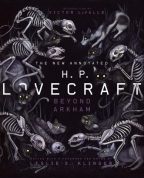
Leslie Klinger, for The New Annotated H. P. Lovecraft: Beyond Arkham (Liveright)
Seth Dickinson’s epic fantasy series which began with the “literally breathtaking” (NPR) The Traitor Baru Cormorant, returns with the third book, The Tyrant Baru Cormorant.
The hunt is over. After fifteen years of lies and sacrifice, Baru Cormorant has the power to destroy the Imperial Republic of Falcrest that she pretends to serve. The secret society called the Cancrioth is real, and Baru is among them.
But the Cancrioth’s weapon cannot distinguish the guilty from the innocent. If it escapes quarantine, the ancient hemorrhagic plague called the Kettling will kill hundreds of millions…not just in Falcrest, but all across the world. History will end in a black bloodstain.
Is that justice? Is this really what Tain Hu hoped for when she sacrificed herself?
Baru’s enemies close in from all sides. Baru’s own mind teeters on the edge of madness or shattering revelation. Now she must choose between genocidal revenge and a far more difficult path―a conspiracy of judges, kings, spies and immortals, puppeteering the world’s riches and two great wars in a gambit for the ultimate prize.
If Baru had absolute power over the Imperial Republic, she could force Falcrest to abandon its colonies and make right its crimes.
