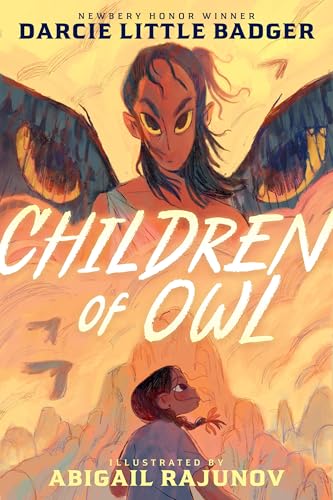
 Shelf Awareness: The fourth solo novel for young readers from Newbery Honor-winning author Darcie Little Badger (A Snake Falls to Earth; Elatsoe) is a fairytale, a ghost story, and a striking narrative about trauma, community, and what we owe to the dead.
In a desert trailer park in Mockingtown, Tex., three Lipan Apache cousins battle with both personal and real ghosts. Sixteen-year-old Maisie’s grief over the death of her best friend, Mara, follows like a specter; Joel becomes the unwitting guardian of a lost animal child disguised as a kitten; and Verona is haunted by the very literal ghost that her non-native employers have unearthed by stealing from an ancient burial site.
Hovering above them all is Owl, a spirit only Maisie can see. Owl’s presence brought doom to her family’s doorstep once before, and he has arrived with vague news of more to come. Maisie, determined to avoid catastrophe, enlists her cousins to help her reverse the tides of fate, and she vows to make amends with whatever forces threaten their family.
Children of Owl is a dreamlike and sophisticated piece of genre fiction that is rooted both in Little Badger’s Lipan Apache traditions and the wider well of fantasy. Throughout, Little Badger uses a distinctly native lens to subvert horror and fantasy tropes–such as the haunted Indian burial ground and human transformation into animals and beasts–expanding on Lipan spiritual beliefs around ancestral traditions and animal people. The novel’s format fits the author’s tone, alternating between third-person narration, diary entries, and comic book pages. Artist Abigail Rajunov’s illustrations provide atmosphere, her scratchy, broken line depicting emotive figures with giant eyes. Her art shines in the colors of desert dawns and dusks, featuring golden skies bruised a cool purple and shadows taking on the dark rust of sandstone.
This YA novel contains complexly layered symbolism and figurative storytelling, but Little Badger’s prose is strikingly clear, making a somewhat obscure story feel accessible. Owl’s presence often acts as a proxy for Maisie’s post-traumatic hypervigilance, while Verona becomes a literal voice for her people when the ghost speaks and acts through her. Little Badger’s ability meticulously to meld fantastical worlds with Indigenous traditions is what gives this speculative work its satisfying weight and makes it feel entirely, magically possible.
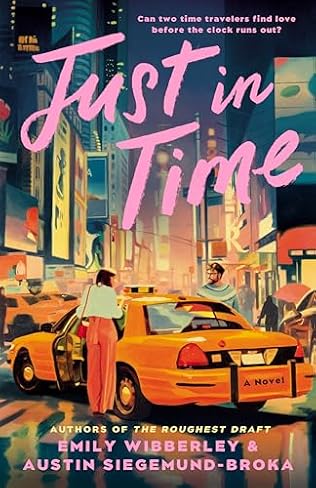 Publishers Weekly: In this enchanting, lightly speculative outing from married coauthors Wibberley and Siegemund-Broka (The Roughest Draft), two lonely New Yorkers must navigate tangled relationships with family, work, and friends before they can trust each other enough to fall in love. Gwen is a hardworking lawyer who achieves career perfection by using a unique ability she discovered as a teen: she can ask any taxi to take her back in time. This comes in handy for fixing mistakes and catching up on assignments when there is not enough time in the present. Gwen doesn’t realize how isolated her workaholic tendencies have left her until she encounters another time traveler, Ian, who shares the same taxi talent and uses it to protect those around him from harm. A valued friendship turns into a strong attraction-until their time-traveling abilities deteriorate and Gwen worries that their budding relationship is the cause. The authors masterfully balance the magical trips to the past with the everyday challenges of the present while developing a heartwarming and convincing connection between the leads. These two are made for each other. (Dec.)
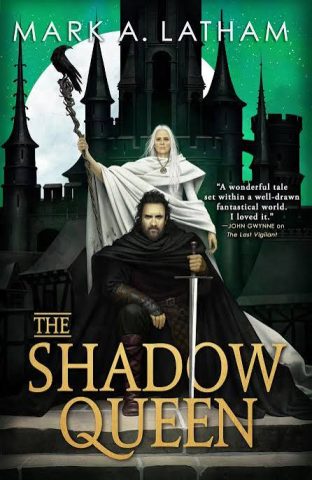 Booklist: After the events of the first book in the Kingdom of Oak series (The Last Vigilant, 2025), Hawley, still serving the formidable Enelda Drake, has made a somewhat awkward home for himself in a bustling city where he soon finds himself shielding Enelda from too many visitors, who are eager to see the only living True Vigilant and request her help. Against Hawley’s advice, Enelda takes on a seemingly straightforward case brought to her by a young man who is desperate to prove that his grandfather is innocent of treason. At the same time, nobles are being mysteriously murdered across the city, and when the two dangers intersect, Enelda and Hawley find much more than they bargained for. Leaving behind the lore and magic of Majestics and Riftborn for political machinations, Latham’s second book is a deep dive into the motivations of those who think they run the world and the true objectives of those who know they do. With the same vibrant world building and skillful character development of The Last Vigilant, Latham takes readers on a whole new journey, sure to reach an explosive and satisfying conclusion with the proposed third novel of the trilogy.
 Library Journal:
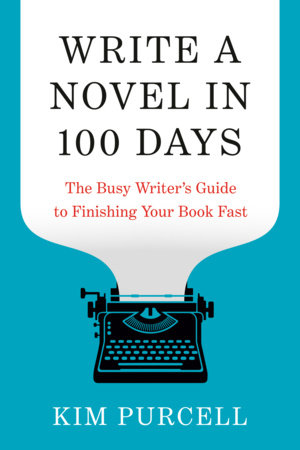 Library Journal: YA novelist Purcell’s (Trafficked) first foray into nonfiction is a dependable road map for all those who want to take the ultimate leap and write a novel. She doesn’t shy away from the fact that the act of writing a novel can be tied up in so many real-life obstacles. Purcell outlines the process by breaking the steps down into a tangible timeline and manageable exercises. Purcell uses bestselling books, such as Rebecca Yarros’s Fourth Wing and Gillian Flynn’s Gone Girl, to showcase examples of planning out a novel from start to finish. Purcell’s method is extremely detailed and relatable overall, and she explores what to do if would-be authors only have 15 minutes a day to write. She calls them “Fifteen Magic Minutes” and offers some thought-provoking prompts to get the writing flowing, such as laying out every aspect of the world and characters so that at the end of each exercise there are no doubts about the characters or the story. VERDICT: A great book for writers who are at the beginning of their journey and don’t know where to start.