Publishers Weekly: This swashbuckling, planet-hopping riff on The Count of Monte Cristo from Palumbo (Skin Thief) follows Virika Sameroo, who, having emigrated as a child from the Exterran Antilles to Invicta, the capital planet of the Æerbot Empire, is determined to break through the poverty and prejudice that centuries of colonization have inflicted on her people. She becomes the first Exterran Antillean commissioned to an Æerbot spaceship, the Oestra—but as a woman and an Exterran, Virika is not trusted by her crew, and one officer in particular, Lieutenant Lyric, despises her for refusing his sexual advances. When Oestra’s captain falls ill and puts Virika in command, she brings the ship home to visit her mother and her lover. Their reunion is cut short when the captain dies—and Virika is arrested for his murder. Wrongfully sentenced to life in prison, she plots revenge against the empire. After escaping, briefly joining a band of pirates, and taking on the sobriquet the Countess, she leads the Antilleans into a rebellion against Invicta. Palumbo’s post-colonial space opera take on Dumas’s novel moves at a whiplash-inducing pace. Evocative descriptions, especially of food, add texture, though a late twist disappoints. It’s not perfect, but fans of speculative revamps of classics will find plenty to enjoy.
Locus: Like Elatsoe, Sheine Lende is much more chill than your typical YA fantasy or YA mystery. The stakes are high, but it never feels stressful. There is little on-the-page violence, and even when things get heavy or dangerous, the reader always feels safe. Little Badger guides the reader through a fascinating world. The pace is gradual without being too slow, and is light on action. Things take the time they take. Little Badger doesn’t skip the reader ahead or speed things up for the sake of drama.
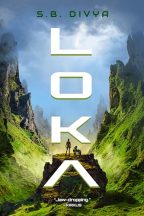
Publishers Weekly: The warmhearted and immersive second sci-fi adventure in Divya’s Alloy Era series (after Meru) follows teen best friends as they circumnavigate a post–climate change Earth. Akshaya grew up in deep-space exile after her parents gave up their place on Earth to be together. Genetically engineered to thrive on Meru, the planet home her parents have fought so hard for, Akshaya dreams instead of adventures back on Earth. She and her mother strike a deal: if Akshaya and her friend Somya can complete the Anthro Challenge, a journey around the globe using only human-era technology, Jayanthi must give her the choice to stay on Earth. As she and Somya make new friends and battle mounting obstacles, including Akshaya’s own precarious health, Akshaya begins to question everything she thought she wanted. Informed by the author’s experiences working in science and engineering, and struggles with long-Covid-induced chronic fatigue syndrome, the narrative explores questions of belonging and friendship with a clear-eyed precision, bringing to mind the heartfelt emotion of Becky Chambers’s Wayfarers series and the worldbuilding and deep ethical questions of The Terraformers by Analee Newitz. Teen and adult readers alike will easily fall in love with Akshaya and Somya. Agent: Cameron McClure, Donald Maass Agency. (Aug.)
Locus: To quote Tom Clancy (or was it Jeff Bezos?), it takes ten years to become an overnight success. I suspect Vajra Chandrasekera can relate. He spent a decade working on his craft, with short fiction published in various genre magazines and anthologies. Then, last year, Chandrasekera published his first novel, The Saint of Bright Doors, which immediately caught fire, drawing plaudits and praise from critics and fans. Fast-forward to the present day, and the novel has been nominated for multiple prizes (the Hugo, the Nebula, the Lammy) and recently took home the Crawford award. I featured The Saint of Bright Doors on my Locus ‘‘Year in Review’’ essay and spoke ecstatically about the novel on The Writer and the Critic podcast. What makes it such an astonishingly good debut is Chandraesekera’s boldness – the imaginative, radical manner in which he fuses science fiction and fantasy, social realism, and surrealism. But if The Saint of Bright Doors is an experimental novel in (mostly) conventional storytelling clothing, Rakesfall bares it all, a full-frontal deconstruction of narrative and genre.
Publishers Weekly: In this dazzling and eclectic fantasy from Hall (Star Eater), a scrappy, foul-mouthed medium wrangles with an impressively imagined cohort of skin thieves, smugglers, and shape-shifters—as well as her own inner demons. At 17, Karys Eska ran away from an abusive father and sold her soul to the god Sabaster to become a deathspeaker, one able to communicate with the deceased. When, years later, a job gone wildly wrong leaves her stranded in a sea cave, a stranger saves her life. Feraine Taliade turns out to be a diplomat from a neighboring country who survived an assassination attempt that left him badly wounded. Karys tries to use her powers to save him—and by fluke instead attaches him to her as her shadow. At first merely awkward, the situation quickly proves perilous; the assassins now pursue Karys as she sets out in search of a magic that can separate her from Feraine. Along the way, the pair become emotionally attached, but the odds that both of them will survive a powder-and-potion-induced separation are slim. Adding to the danger, Sabaster grows increasingly persistent in summoning Karys to his underworld, where he aims to make her his bride. Though extraordinarily complex, the plot never loses focus or pace. With elements of gut-turning horror, adventure, and romance, this is a powerhouse.
AudioFile: Lucy Rivers and Will Thorne energize each other as dual narrators of this steamy fantasy-romance blending pirates, fae, and Vikings. Erik rules Ever Kingdom, but that rule is compromised by the man who murdered his father and trapped Erik in the underwater world called the Ever Realm. When Livia, the daughter of the man responsible for trapping Erik, accidentally breaks the Ever Realm open, Erik rages out to avenge his father’s death–but not if Livia can capture his heart first. Rivers provides a captivating portrayal of headstrong, passionate Livia. The sensual encounters crackle with erotic tension as Livia’s voice catches and becomes increasingly breathy. This engaging dark fantasy-romance is best listened to with headphones. J.M.M. © AudioFile 2024, Portland, Maine [Published: MAY 2024]
Bookpage: A prequel to acclaimed YA author Darcie Little Badger’s 2020 debut Elatsoe (which features Shane’s granddaughter, Ellie, as the protagonist), Sheine Lende is a powerful and deeply moving tale of family, grief, cultural identity and magic. As a Lipan Apache woman herself, Little Badger combines the myths and legends of her tribe with fantastical elements to tell a story that, while fictional, rings true. The universe the book occupies is almost identical to our own, except in Little Badger’s version of reality, the ancient folklores that have informed cultural beliefs and practices since time immemorial are made manifest in the real world—but they exist alongside representations of true and historic modes of systemic oppression used by the U.S. government against indigenous peoples like the Lipan.
Booklist: “[T]his is how she and I have spent our long and convoluted journey through time: joined at the hip, joined at the death, haunting each other, carrying each other.” Chandrasekera follows two entwined souls through an endless cycle of reincarnation and destruction in this slipstream novel, a poetic saga about identity and memory, colonialism and revolution, connection and commitment. It begins with a hauntingly enigmatic analysis of a TV show starring teenagers Annelid and Levert and set during a “war which is now over but never over.” Annelid is possessed by a demon in the jungle, and Leveret, a newly made revolutionary, is murdered. Though the show, watched by fans in the far future, ends with Leveret’s death, their story continues in the many nonlinear lives and worlds into which they reincarnate. These worlds, from ancient legends to a ruined, abandoned Earth, are woven from South Asian culture and populated with corrupt politicians and kings, revolutionaries, demons, living corpses, old gods, posthumans, artificial intelligences, and more. Chandrasekera employs multiple narrative forms and storytelling styles in this often difficult to parse but impossible to forget surrealist experience.
Reactor: Those Beyond the Wall, Micaiah Johnson’s second novel, can be read as a standalone, or you can read it as a followup that’s something of a mirror image to The Space Between Worlds, her 2020 debut. Space was set mostly inside the walls of Wiley City, where an unlikely survivor named Cara found an unusual way to make a life among the privileged. Beyond is set in the nearby desert community of Ashtown, under the sometimes-deadly glare of the sun. That sun is far from the only deadly thing in Ashtown.
Both places are changed by a technological innovation that allows people to move between worlds. Each person exists, or existed, in every world, though their lives are different—sometimes more different, sometimes less. There are catches, because there are always catches. It’s not an easy experience, seeing the other yous that might have been.
This book isn’t about technology, though. (Johnson is very aware of the fine line between magic and science.) It’s about revolution, and it’s about Mr. Scales, one of the many runners who serve Nik Nik, the emperor of Ashtown. Technically, Scales is a mechanic, but like her fellows, she’s also a killer. She has been other things, and lived other lives, but at this moment, in this life, everything goes to hell when she watches a friend die horribly. There is no killer. Helene X just folds in on herself, bones breaking and reversing, as Scales tries to hold her together.
The threat that causes these terrible deaths—because of course there are more—affects primarily people in Wiley, but trouble in Wiley quickly becomes trouble for Ashtown. In the city, a scientist named Adam Bosch understands better than most what is happening. When Scales and her colleagues bring him to their emperor, a whole host of events are set in motion.
The question of who is killing the mangled dead is less of an issue than the matter of how to stop it. This is the catalyst for Johnson’s story, but its engine, its heart, is Scales, who gradually turns her attention to the pre-existing, systemic issues that affect everyone in Ashtown. The people of this world need to put a wall between themselves and the entitled, brazen enemy that would destroy them. But there is an existing wall that isn’t doing Ashtowners any good.
Shelf Awareness: A woman forced into heroism races against time and sinister magical forces to save her family in the perfectly paced and deliciously threatening dark fantasy novella The Butcher of the Forest by World Fantasy Award winner Premee Mohamed (And What Can We Offer You Tonight).
“It was not yet dawn when they came for her,” the story begins, setting an ominous tone that only intensifies as men drag villager Veris Thorn before the Tyrant, her realm’s merciless conqueror. His two children have vanished into the Elmever, a parallel magic world that invisibly opens from a nearby wood, and he has heard that only Veris has ever brought a child back from it alive. He orders her to retrieve his children or “your village will be razed… and we will roast your people alive… and eat them.” Veris slips into the Elmever with only three tokens to guide her and a single day to retrieve the children. She must face poisonous magic; half-rotted undead beasts bent on devouring her; and elder beings who want her deepest self, all to save the children who will one day oppress her people in place of the Tyrant–if Veris can bring them out in one piece.
Mohamed puts a chilling twist on the fairy tale of the stolen child. Veris, a commoner in her late 30s with little power beyond her wits and experience, makes for a captivating heroine whose vulnerability and fear give the narrative the gasping tension of a horror movie. Butcher of the Forest is short, sharp fantasy at its finest.