 Shelf Awareness: Any breakup can make a person feel like the world has just ended, but high school senior Ozzie Pinkerton of Florida feels even worse: as far as the universe is concerned, his ex-boyfriend Tommy never existed.
While Shaun David Hutchinson is a master of fusing the bizarre with the mundane, and the plot is delightfully constructed, it is Ozzie’s pained, sardonic voice that steals the spotlight. Hutchinson’s authentic characters, exploring their gender and sexuality with equal parts confusion and confidence, will resonate with many teens who no longer see their identity as binary or unchanging. Ozzie’s story may be fantastical, but its emotional honesty renders the whole complicated story believable, and readers will flock to its central truths.
Discover: Shaun David Hutchinson’s smart YA novel finds authenticity in the weirdest of places.
 Locus: The fifth book in the urban fantasy world of the Others picks up shortly after the Elders, particularly powerful and deadly forms of the Others, stopped an attempt by humans to kill off the shapeshifting Others and take over. Having wiped out much of humanity in this world’s version of Europe, the Elders, who have little experience with humans, want to know what makes some humans so much trouble. They decide to invisibly observe Lakeside Courtyard, where humans and Others have learned to co-exist. Unfortunately, the Elders turn up just as a particularly bad human arrives the brother of police lieutenant Crispin James Montgomery, one of the cops who helped defend the Courtyard, and brought most of his family there to live. That brother, Cyrus, is totally different, a self-absorbed petty criminal who manipulates others to avoid the repercussions of his actions, with a troubled wife and two children already imitating their abusive father’s bad behavior. Cyrus makes a fascinating villain, too stupid or lazy to learn what’s really going on, making plans that fail because of his ignorance which has its funny moments but also causing a lot of pain for those around him. The leaders of the Courtyard, aware that the Elders are watching, keep a close eye on him, but his plans suddenly take a far more dangerous turn, leading to some serious thrills. As always, Bishop spins an engrossing tale and ultimately we get a sweet ending that those who’ve been following the series should really appreciate, as the story arc involving Meg and Simon Wolfguard concludes.
 Library Journal: Palmer’s sequel to Too Like the Lightning brings the next phase of Mycroft and Bridger’s journey in a sphere that is beginning to collapse. While the dense prose may be rough going for some readers, the eloquence of Palmer’s reflections on social issues cannot be denied.
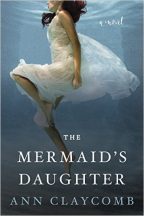 Booklist: Self-styled drama queen, Kathleen’s phantom pain in her feet and mouth is anything but artifice; it is the same kind of inexplicable, excruciating pain that drove her mother to suicide. The only thing that affords Kathleen relief is immersion in water, preferably the sea, though it is the sea that generations of women in her Irish family, which seems to be cursed, have chosen as their means of suicide. Now, on a vacation trip to Florida with her girlfriend, Harry, she begins hearing mysterious voices from the sea calling, “Come home. Come home.” Angrily denying their summons, she returns home with Harry return to Boston, where Kathleen suffers a debilitating attack that leaves her hospitalized. Harry and Kathleen’s father agree that an end to her pain might be found if she is taken to Ireland. But will it? Claycomb’s fine first novel is told from multiple points of view, even that of mermaids, for, yes, the novel is a loose retelling of Hans Christian Andersen’s fairy tale The Little Mermaid. And, like its source, it is numinous and lovely.
 Kirkus Reviews: The first of a two-book series concerning a future Earth society patterned after the principles of the Enlightenment.
 Publishers Weekly: