Kirkus: The rich worldbuilding is arguably the novel’s biggest strength, but the well-developed dynamics between the main characters, particularly Mel and Ismene’s complex relationship, are also compelling. The narrative has an impressive pace fueled by intertwining and action-packed plotlines that maintain the pedal-to-the-metal momentum.
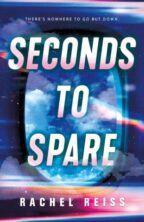
Shelf Awareness: Two teenagers are stuck in a time loop, reliving the last few minutes before a plane crash, in Rachel Reiss’s clever and arresting YA locked-door mystery, Seconds to Spare.
Characterization is sometimes thin–for example, little information is shared about Evelyn’s relationship with her still-living mother or her plans as a recent high school graduate–but kinetic pacing and unexpected plot twists make Seconds to Spare a gripping narrative. The time loop element, reminiscent of movies like Groundhog Day and YA novels such as Lauren Oliver’s Before I Fall, adds an intriguing speculative element to the mystery, and the clock ticking toward a permanent plane crash raises the stakes. Reiss (Out of Air) develops visceral action scenes–“everything lurches forward at an entirely unnatural angle. Nothing’s where it should be. Side is now down, down and up are now to the side”–and the plane cabin setting creates an atmosphere of claustrophobic suspense. Mystery fans will enjoy deciphering clues alongside the characters as this propulsive mystery reveals its secrets.
Shelf Talker: Two teens who keep repeating the same 28 minutes in a crashing plane must work together to break the time loop and prevent the crash in this gripping YA mystery.
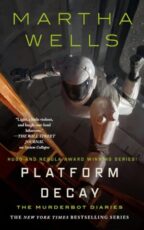
Booklist: The newest Murderbot novel (after System Collapse, 2023) has our titular (not really an anti) hero aided by Three, the newest rogue SecUnit, on a stealth mission in a planetary ring habitat to retrieve members of Mensah’s family, who’ve been kidnapped by the Barish Estranza Corporation in retaliation for her role on the plague planet. Along the way, an unexpected ally complicates the mission, and somehow the corporate mercs seem to know they’re coming. The plot starts off in the middle of the action and doesn’t let up until the very end. It’s an incredibly satisfying ride, and one of the funniest installments in the series: After their false memory issues, Murderbot installed an “emotion check” subroutine and it’s a perfect vehicle for the sarcastic, cynical humor readers crave. Perhaps most intriguing is a small side plot that teases a change with potentially huge implications. Wells returns to form with this one, offering a setting and cast that feels smaller and more intimate, more like her earlier novellas. At the same time, she sets up exciting possibilities for where this universe could go next. The family dynamic adds real poignancy, providing one of the most emotionally resonant Murderbot tales yet. HIGH-DEMAND BACKSTORY: The success of the Apple TV series only adds to Murderbot’s popularity, and readers have patiently waited several years for the next installment in the series.
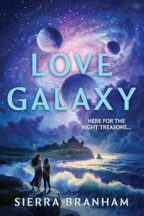
Publishers Weekly: Reality television goes galactic in Branham’s thrilling sapphic sci-fi debut. After poverty-stricken trash collector Artemis Ialan has an unfortunate public run-in with the prince and princess of the Expan empire, she’s invited to appear on Love Galaxy, a reality dating show that matches royals and others high in the empirical hierarchy with important people from other systems in the empire, like a diplomatic—and deeply propagandistic—version of The Bachelor. The prince, Nix, has taken a liking to Artemis, and the princess, Spielan, offers her a massive payout to join the contestants vying for his hand, money that could drastically improve Artemis’s circumstances and potentially save her mother’s life. As one of the few contestants from the fringe systems, Artemis has no idea what to expect from the show and quickly finds herself in over her head. When a fellow contestant turns up dead, it’s all she can do to stay afloat while dealing with a killer on the loose, intergalactic intrigue, and the combined attention of both royal heirs. Branham does a fantastic job weaving seemingly disparate threads together. The murder mystery is fairly clued and the antagonistic attraction that emerges between Ellie and Spielan feels real and heated. Fans of science fiction with a romantic edge should snap this up. (May)
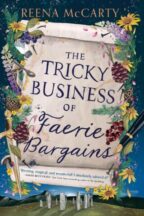
Publishers Weekly: McCarty’s elegant and melancholy fantasy debut follows Poppy Hill, who in 1880, at the age of five, was abducted by faeries and taken to their world, called Otherside, where she grew up and became a cook for the Wild King. She was then returned to the human world in the modern day as a woman in her late 20s. Poppy now works as a consultant for the Montana branch of law firm Carter Lane, which negotiates contracts between humans who want extraordinary abilities and Otherside agents, who grant them—for a price. Her specialty is scrutinizing contracts for loopholes that Otherside can exploit. The plot kicks into gear when Poppy botches a case involving German anthropologist Gabriele Albrecht, who wants to trade her sense of taste for the ability to speak every human language, not catching a loophole that results in Gabriele being bound to serve seven years in Otherside. Now Poppy must return to Otherside to rescue Gabriele, risking her safety, her job, and her friends in both worlds. This desperate quest leads her into negotiations with her former lover, Elan, and a plot to depose a king. Wistful and witty with exquisite worldbuilding, McCarty’s sprawling epic challenges notions of identity, loyalty, and the places one calls home. It’s a thrilling start.
School Library Journal: The nail-biting action starts with the very first sentence of this superb thriller. Evelyn has been trapped in a 28-minute time loop 194 times on an airplane that’s about to crash. Each time the plane starts to nosedive, she sees a flash of white light and wakes up in her original seat, reliving the same terrifying sequence. She has memorized every passenger’s name and seat number, and has had conversations with all them, except one: Rion, the boy she met briefly in the airport. Sparks flew when their hands accidentally touched. Rion sleeps through every loop, and from what she’s discovered in his bags, he is hiding a secret. Evelyn experiments with new actions to break the cycle, but when she accidentally awakens Rion, she realizes he remembers the loops, too. The other passengers and the flight crew have no memory of the loops, leaving the pair isolated in their knowledge of the crisis and heightening every moment of suspense. Chapters alternate between Evelyn’s and Rion’s points of view, with just enough backstory to make readers care about the characters and briefly take the story beyond the airplane. Even though the tension is high, it is often relieved by moments of levity as the humanity and quirks of the others on the plane shine through. Main characters cue white.VERDICT An absolutely wild ride that deserves a place in every teen collection.
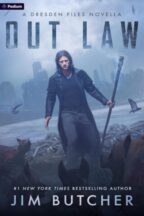
Kirkus: James Marsters’ weary delivery perfectly captures Harry Dresden’s fractured psyche as he navigates a year of mandatory mourning and political maneuvering in Chicago. Marsters doesn’t just read; he inhabits Harry’s exhaustion, using deliberate pacing and a somber tonal palette that underscores the protagonist’s post-traumatic stress. Marsters’ gift for distinct vocal characterizations remains sharp, effortlessly pivoting from the ethereal, detached elegance of the Sidhe to the grounded warmth of Harry’s remaining allies. By leaning into the book’s quieter, more introspective moments, Marsters elevates this urban fantasy’s emotional stakes, transforming a year of Dresden’s life into a poignant study of grief. It’s an immersive performance that makes the wizard’s vulnerability feel hauntingly real. Marsters’ soulful performance makes this a compelling entry in the Harry Dresden series.
Publishers Weekly: A far-future gang attempts an interstellar museum heist in this crafty sci-fi novella from Tanzer (Creatures of Charm and Hunger). Led by Tarquin Lennox, a wealthy human man affiliated with Earth’s last corporation, the crew also includes Arakachi Misora, “a set of sextuplets folded into a single body” acting as the team’s muscle; Jack Kirby, a powerful machine intelligence there to interface with the computer systems; Tchick-tchick, the insect-like alien hive mind captaining their space craft; and Fennel Tycho, Jack’s former attaché and the tale’s first-person narrator. Their mission: to liberate six masterpieces of Earth art from a distant Celerian museum and replace them with exact copies. In the 21st century, humanity allowed the Celerians to temporarily safeguard these pieces in exchange for technological solutions to Earth’s “multifarious” problems, but the aliens subsequently refused to return them. The mission gets off to a rocky start when the team learns they no longer have corporate support—Tarquin has gone rogue. As they forge ahead, Fennel recounts the wacky sequence of events that brought her and humanity to this point, complicating the otherwise straightforward adventure with poignant observations about the significance of original art and art history. This bite-size romp is a wild and thought-provoking ride. (May)
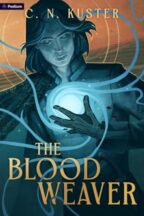
Library Journal: Petra Grady continues to develop her bond with the shadow, Pluck, as the first weaver/shadow pair in nearly a millennium. Even with the support of researcher and boyfriend, Benedict Strom, at St. Enoc, there are some who do not welcome the weaver who can use shadow magic. When Petra and Benedict discover another weaver, they find she is chased by Thoth, a shadow who set mages against weavers thousands of years ago and left betrayal in his wake. As Thoth continues his quest to destroy any stability between the two sides, Petra and Pluck find themselves running from both the university and the mage courts. If they cannot find a way to defeat Thoth and reveal the truth and their innocence, then Petra and Pluck could lose everything. While the pacing is a little bumpy, the novel’s worldbuilding is immersive. VERDICT Harrison’s follow-up to Three Kinds of Lucky continues to develop the world of this contemporary fantasy. Fans will find it completely different than the “Hollows” series, but the spirited protagonists and character relationships showcase Harrison’s prose.
Library Journal: This collection of essays, some original and many revised and updated, represents a wide range of thought and many sterling examples of what makes science fiction and fantasy popular and so appealing for readers, along with what causes some readers not to like it. They also offer insight into where the speculative fiction conversation with itself, its past, and its readership is going in the future. Readers interested in the study of genre and those who have been captivated by SF’s ability to explore the future while commenting on the present will find their TBR piles expanding exponentially. These essays provide a thoroughly researched but highly opinionated exploration of the science fiction and fantasy genres by two award-winning novelists who have, in addition to writing in the genre, spent significant time thinking and writing about their genre and analyzing where speculative fiction has been and where it might be going.
VERDICT Highly recommended for collections of literature studies, particularly but not limited to studies of SF and fantasy, and collections where Walton’s What Makes This Book So Great and An Informal History of the Hugos, as well as both authors’ novels, have been popular.