 AudioFile: Priest’s compelling audiobook stars high-schooler May, computer whiz Trick, and the city of Seattle, which figures prominently in their adventures. May’s best friend died in a car accident when they were younger. Only now, May’s discovering hints that Libby may not be gone after all. Narrator Mary Robinette Kowal has an interesting voice (listeners may find themselves trying to place her regionalisms), and it sounds just different enough to add even more auditory interest. The print book features graphic novel sections, which the audio production effectively evokes with music and sound effects, while Kowal uses a booming movie trailer voice to clearly distinguish them from the rest of the narrative. Listeners will be caught up in the suspenseful (if occasionally far-fetched) action.
May 022016
May 2, 2016
 New York Times: In the Three Worlds, sentient nonhuman species are a dime a dozen, and the detritus of countless lost civilizations is embedded in a lush, magic-infused landscape. The author Martha Wells, who trained as an anthropologist, has previously brought readers to this verdant fantasy realm via a trilogy and a series of shorter stories, but THE EDGE OF WORLDS (Night Shade, $24.99) marks the start of a new saga in the Books of the Raksura. […] The result is breathtakingly surprising and fun. So for readers who missed earlier entry points to this delightful series, now is the time to get on board.
 Publishers Weekly: Griep dives into the dystopian genre in this outstanding novel, which challenges preconceptions of the genre. After a plague ravages a once-thriving world, a harsh rivalry emerges between two immune communities: the decaying City, and the idyllic New Charity. Cressyda, a New Charitan fleeing her former life, is caught up in a political struggle when she returns to New Charity in the wake of her father’s mysterious death. Cressyda clashes with her childhood friends, Len and Cas Willis, as she tries to understand the dangerous thrall New Charity is under.
 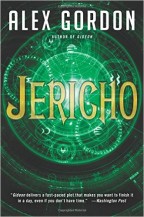 Publishers Weekly: In Gordon’s superb follow-up to 2015’s Gideon, Lauren Mullin is coming to terms with her powers as a witch and as a Child of Endor. Her role is to guard the “thin places” such as Gideon, Ill., that separate the living and the dead. But Gideon’s residents are leaving, and without support from the other Children of Endor, she fears for the town’s future. When the enigmatic Gene Kaster approaches Lauren with an offer to head to Carmody Peak, the Oregon woodland retreat of the wealthy Andrew Carmody, and meet others on the council, she hopes for a relaxing few days and a chance to ask for the council’s help, but instead she gets more trouble. Andrew wants Lauren to help his unhappy, powerful teenage daughter, Nyssa. The nearby ghost town of Jericho is a nexus for strange happenings, and something diabolically evil is lurking there, hungering for Nyssa. Lauren promises to protect the girl with her life.
  RT Book Review:
  Publishers Weekly: With remarkable emotional insight and precision, mystery writer Winslow turns to memoir to narrate the long-delayed prosecution of the man who raped her two decades ago….Her story is profoundly troubling, but the legitimate care and consideration of Winslow’s legal support system is powerfully redemptive. Her account bravely illuminates a process many survivors of rape must endure.
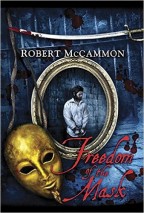 Publishers Weekly: McCammon’s rousing sixth yarn featuring Matthew Corbett (after 2014’s The River of Souls) transports the early 18th-century American problem solver across the Atlantic to London, where he’s clapped into hellish Newgate Prison on murder charges. Matthew quickly becomes embroiled in mysteries involving fellow inmate Daniel Defoe; a gin-running street gang, the Black-Eyed Broodies; a kidnapped Italian opera singer; and a masked avenger named Albion, whose exploits are sensationalized (along with Matthew’s) in a penny dreadful broadsheet, the Pin—all the while with Matthew’s patron, Hudson Greathouse, and Matthew’s sweetheart, Berry Grigsby, in hot pursuit. McCammon’s intricate and intersecting subplots keep the story twisting unpredictably, and he adds menace to the mayhem with hellish descriptions of London straight out of a Hogarth engraving: all bawds and brutes a-wallow in the squalor of the city’s seamy street life. Fans of the series will race through this hefty page-turner to see where Matthew’s latest adventure leads him.
 Publishers Weekly: As with Anatomy of a Misfit (2014), Portes’s second YA novel has a seductive zaniness and almost unstoppable exuberance. Sixteen-year-old Willa Parker, a small-town girl and native Iowan, reluctantly heads east to a fancy New England boarding school, where she meets Remy Taft, an infamous student from a famous family, who adopts Willa like she’s a wide-eyed puppy. Though it takes some wading through Willa’s mile-a-minute internal monologue in the opening chapters, once her adventures with Remy begin, the story turns into a heartfelt, hilarious thrill. Willa’s dry observations can be laugh-out-loud funny (“I’m not sure what the cutoff point is for gyrating in sparkly clothes, but I can tell you some of these people are really pushing it,” she says of the crowd at a Brooklyn club). But Willa’s early announcement of a plan to kill herself and other foreshadowing hint that Portes’s characters are careening toward tragedy, with Remy at the center of a brewing storm.