 Library Journal: A plague has decimated the planet’s population. Former ballerina Cressyda resides in the City, a community of survivors that remains a collapsed ruin compared to New Charity. This society stands strong behind its wall, with a hydroelectric dam that ensures no one from the City can access that water. When Syd learns she has inherited her father’s New Charity ranch, she returns both to the family she left behind years ago and to her then best friend, Casandra. Cas, a seer and acolyte to the Spirit, knows that Syd wants to open the dam for everyone, whatever the cost to New Charity. The two women realize that the dam draws on strange magic that, if tampered with, could be dangerous. Syd must find a way that allows both settlements to survive, despite her unearthing of the depth of New Charity’s corruption—and the facts of her own father’s murder. VERDICT In a story of family and betrayal, community and survival, Griep (Letters to Zell) reimagines a post-apocalyptic Trojan War that brings new life to a classic epic.
Apr 152016
April 15, 2016
 RT Book Review:
 Publishers Weekly: With remarkable emotional insight and precision, mystery writer Winslow turns to memoir to narrate the long-delayed prosecution of the man who raped her two decades ago….Her story is profoundly troubling, but the legitimate care and consideration of Winslow’s legal support system is powerfully redemptive. Her account bravely illuminates a process many survivors of rape must endure.
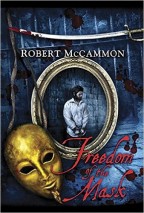 Publishers Weekly: McCammon’s rousing sixth yarn featuring Matthew Corbett (after 2014’s The River of Souls) transports the early 18th-century American problem solver across the Atlantic to London, where he’s clapped into hellish Newgate Prison on murder charges. Matthew quickly becomes embroiled in mysteries involving fellow inmate Daniel Defoe; a gin-running street gang, the Black-Eyed Broodies; a kidnapped Italian opera singer; and a masked avenger named Albion, whose exploits are sensationalized (along with Matthew’s) in a penny dreadful broadsheet, the Pin—all the while with Matthew’s patron, Hudson Greathouse, and Matthew’s sweetheart, Berry Grigsby, in hot pursuit. McCammon’s intricate and intersecting subplots keep the story twisting unpredictably, and he adds menace to the mayhem with hellish descriptions of London straight out of a Hogarth engraving: all bawds and brutes a-wallow in the squalor of the city’s seamy street life. Fans of the series will race through this hefty page-turner to see where Matthew’s latest adventure leads him.
 Publishers Weekly: As with Anatomy of a Misfit (2014), Portes’s second YA novel has a seductive zaniness and almost unstoppable exuberance. Sixteen-year-old Willa Parker, a small-town girl and native Iowan, reluctantly heads east to a fancy New England boarding school, where she meets Remy Taft, an infamous student from a famous family, who adopts Willa like she’s a wide-eyed puppy. Though it takes some wading through Willa’s mile-a-minute internal monologue in the opening chapters, once her adventures with Remy begin, the story turns into a heartfelt, hilarious thrill. Willa’s dry observations can be laugh-out-loud funny (“I’m not sure what the cutoff point is for gyrating in sparkly clothes, but I can tell you some of these people are really pushing it,” she says of the crowd at a Brooklyn club). But Willa’s early announcement of a plan to kill herself and other foreshadowing hint that Portes’s characters are careening toward tragedy, with Remy at the center of a brewing storm.
 B&N SFF Blog: Bishop has built a fascinating world, populated it with unforgettable characters, and set them crashing together in exciting action sequences, all while slowly teasing out an overarching plot that is poised for explosive expansion and raising enough questions that we simply must keep reading to find out what happens next. […] This is a series that welcomes binge-reading, actively rooting for your heroes, booing and hissing at the villains you love to hate, and throwing popcorn at the screen when the other shoe finally drops, and drops, and drops.
 B&N SF&F Blog: Bishop’s fourth entry in the complex Others universe sees things getting increasingly tense between humanity and the Others, even as the latter’s alliance with the human blood prophets led by Meg Corbyn promises a brighter future for both. Treaties start to unravel when the radical group Humans First and Last steps up attacks on the Othersbut their brutal efforts begin to wake forces more powerful and more ancient than the shape-shifters and vampires, putting both humanity and the Others in danger, one Meg’s power of prophecy may not be able to neutralize in time. Bishop brings a wealth of rich detail to her universe, taking cues from today’s headlines and using them to create a fictional setting that feels all too real.
 Shelf Awareness: Shaun David Hutchinson’s bracingly smart and unusual YA novel blends existential despair with exploding planets.